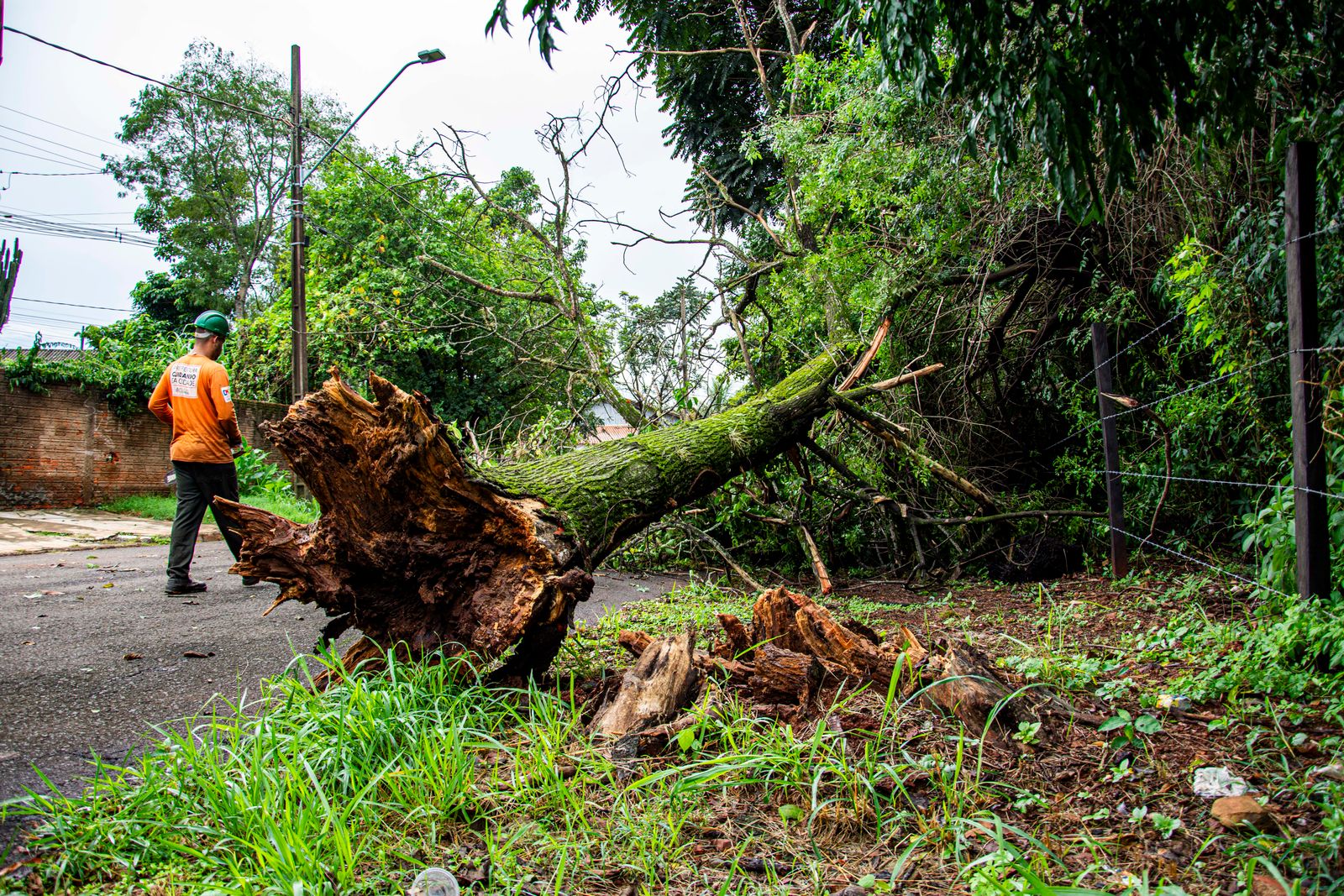
For trees that are already down, leaning, split, or resting on a structure after a storm. We prioritize urgent calls.
Not every damaged tree needs a same-day response, but some situations do. A tree resting on a roof, garage, car, or fence; a trunk that's visibly split or cracked; a tree leaning further than it was an hour ago; or any tree or branch in contact with a power line all call for an urgent call rather than a scheduled appointment.
We'll ask what's down or damaged, whether it's touching a structure or power line, and whether anyone's access to the property is blocked. That information determines how the job is staged — a tree on a roof is handled differently than one blocking a driveway, since one involves risk to the structure and the other is mainly about access.
Summer thunderstorms and occasional derecho-style straight-line winds are the most common cause of sudden tree failure in the Chicago suburbs, and trees already weakened by emerald ash borer or root rot from poor drainage tend to go down first. If a tree survived a storm but looks different afterward — a new lean, exposed roots, cracked bark near the base — it's worth having it inspected even if nothing has fallen yet.
Keep people and pets away from the tree and anything it's touching, don't attempt to cut or move large limbs yourself, and never approach a tree or branch that's in contact with a power line. If a tree is blocking a shared driveway or sidewalk, let neighbors know so no one walks or drives near it.
A tree or large limb that's already down, a trunk that's visibly split or leaning further than before, or a tree resting on a roof, car, or power line all count as urgent. Call right away in these situations rather than waiting for a routine appointment.
No. Stay well back and call the utility company as well as a tree contractor if any part of the tree is touching an electrical line. Treat any line as live until a professional confirms otherwise.
Response time depends on call volume during a widespread storm event, but situations involving a tree on a structure or blocking a driveway are typically prioritized.
Many homeowners' policies cover removal when a tree falls on a covered structure, but coverage varies. It's worth calling your insurer while we're en route so you have documentation of the damage.
Tell us about the tree and we'll get you a fast, free quote — no obligation.
Call (224) 344-3904 Request a Quote Online