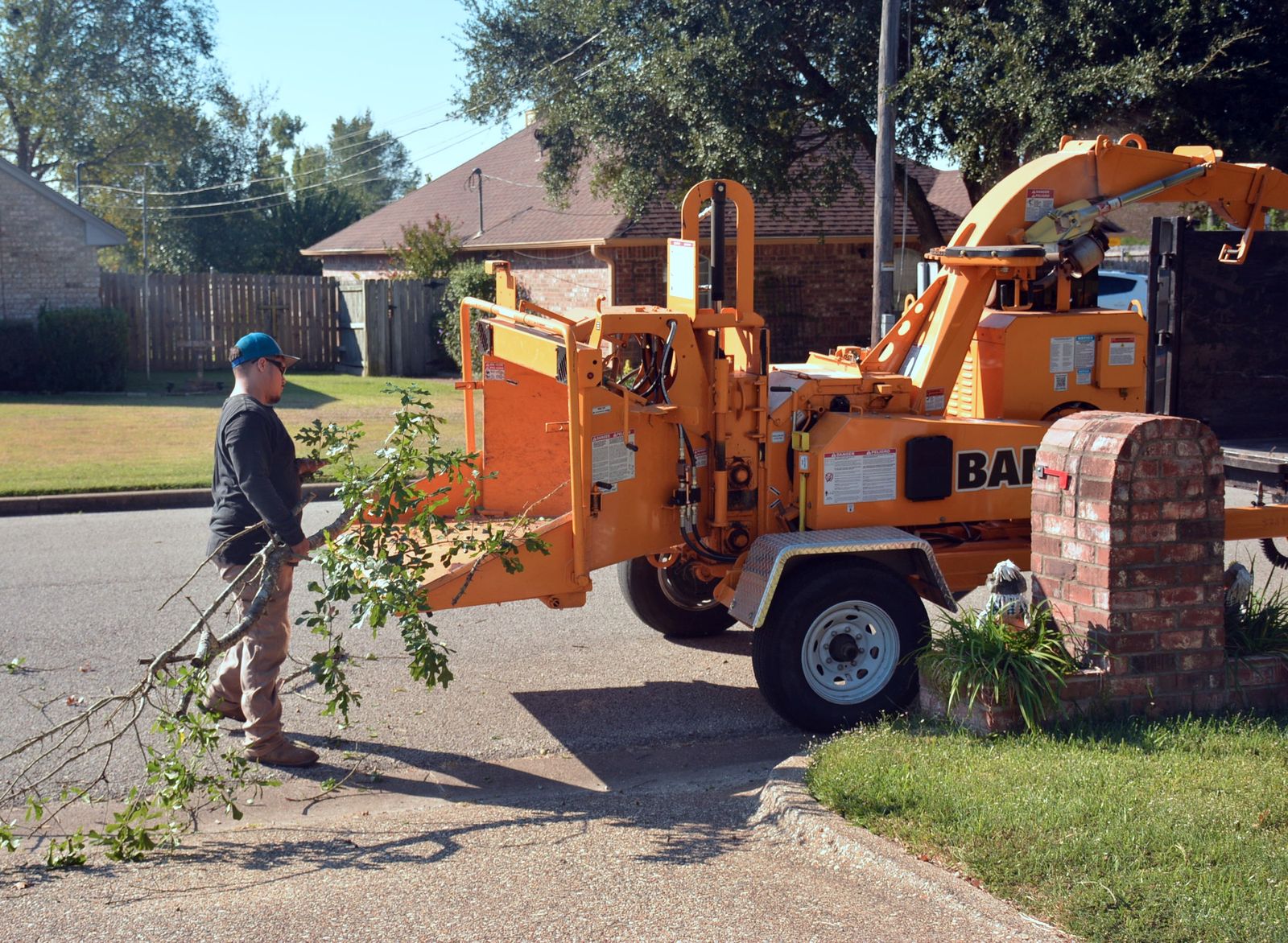
Routine pruning and hazard-limb removal to keep a tree healthy, away from your roofline, and less likely to need full removal later. We'll give you a free quote.
Pruning removes dead, damaged, or crossing branches and shapes a tree's structure so weight is distributed safely across the canopy. For mature trees, that often means clearing branches away from a roofline, thinning a dense canopy so wind passes through more easily, and cutting back limbs that overhang a driveway or walkway.
Consider pruning when branches are touching or overhanging your roof or gutters, when a tree hasn't been trimmed in several years and looks dense or unbalanced, after a storm has left hanging or broken limbs, or simply on a routine schedule to keep a healthy tree that way.
Left alone, a tree's weight can become unevenly distributed, especially after storm damage or years without maintenance. Heavy, overextended limbs are more likely to fail in high wind, and branches resting against a roof can trap moisture and damage shingles over time. Regular pruning catches these issues while they're still a maintenance job rather than an emergency.
Tree height and canopy size, the number of trees being trimmed in one visit, how much climbing or aerial equipment is required, and whether the work is routine maintenance versus storm-damage cleanup all factor into the quote.
If a tree is otherwise healthy and the concern is limited to a few limbs, overgrowth near the roofline, or general shaping, trimming is usually the right and less expensive choice. Removal becomes the better option when the trunk itself is compromised, the tree has lost a large share of its canopy or root system, or repeated pruning hasn't kept pace with new damage each year. We can look at the tree and tell you honestly which side of that line it falls on.
Most mature shade trees benefit from pruning every 3 to 5 years, though young trees are often shaped more frequently and trees near power lines or rooflines may need yearly attention.
In many cases, yes. Removing dead or weak limbs before they fail, and correcting poor branch structure while a tree is young, reduces the chances of a bigger structural problem developing later.
The Village prunes parkway trees on its own rotation, but if you notice a hazardous limb before that cycle comes around, report it to the Forestry Division rather than trimming a parkway tree yourself.
Late winter, while trees are dormant, is generally the best time for structural pruning, though dead or hazardous limbs should be removed whenever they're spotted rather than waiting for a season.
Tell us about the tree and we'll get you a fast, free quote — no obligation.
Call (224) 344-3904 Request a Quote Online